What Impacts Commercial Real Estate Property Value?

Updated: May 7
The commercial real estate market is constantly shifting, influenced by economic conditions, technology, tenant demand, financing costs, property operations, and regulatory changes. Understanding the key drivers of commercial real estate property value is important for owners, investors, developers, and property managers who want to make informed decisions in any market cycle.
Whether you are evaluating a new acquisition, managing an existing asset, planning capital improvements, or reviewing long-term operations, knowing what drives value can help you identify risks, improve performance, and avoid costly mistakes. Interest rates, operating expenses, location, tenant demand, building condition, technology, and regulations all play a role in how commercial properties are valued.
Commercial Real Estate Property Value: Key Factors to Understand
In this article, we’ll break down the major factors that impact commercial real estate property value. From economic conditions and market trends to technology, regulatory requirements, and investor behavior, this guide explains what owners and investors should watch when evaluating commercial property performance.

Economic Factors
The broader economy plays a major role in shaping commercial real estate property value. Interest rates, inflation, employment trends, consumer demand, and business growth all influence how properties are valued, financed, leased, and operated.
For owners and investors, understanding these economic factors can help explain changes in market pricing, tenant demand, borrowing costs, operating expenses, and long-term investment performance.
Interest Rates
Interest rates are one of the most important drivers of commercial real estate property value. When interest rates rise, borrowing becomes more expensive. This can reduce investor purchasing power, increase debt service, and place downward pressure on property values.
Higher interest rates can also affect refinancing, acquisition activity, and overall investor demand. Properties that depend heavily on financing may become harder to purchase or refinance when borrowing costs increase.
The impact of interest rates can vary by property type. Commercial properties with stable tenants, long-term leases, and predictable income may be more resilient. Properties with shorter lease terms, weaker tenant demand, or higher operating risk may be more sensitive to changes in financing conditions.
For property owners, interest rates should be considered when evaluating acquisitions, refinancing options, capital projects, and long-term hold strategies.

Inflation
Inflation affects commercial real estate in several ways. As the cost of labor, materials, insurance, utilities, maintenance, and vendor services increases, property owners often face higher operating expenses.
These rising costs can reduce net operating income if they are not properly budgeted for or passed through to tenants. For commercial condominium associations and multi-tenant properties, inflation can also put pressure on annual budgets, assessments, CAM charges, and reserve planning.
Inflation can also affect construction and capital improvement projects. When materials and labor costs rise, roof replacements, HVAC work, paving, elevator repairs, and other major projects can become more expensive than originally projected.
At the same time, some commercial leases allow owners to recover increased expenses through rent escalations, CAM reimbursements, or triple-net lease structures. Properties with well-written leases and strong expense recovery provisions may be better positioned during inflationary periods.
Employment Rates
Employment trends are a key indicator of demand for commercial real estate. When businesses are hiring and expanding, demand for office, retail, medical, industrial, and service-based space may increase. When hiring slows or companies reduce space needs, leasing activity can weaken.
In the office sector, employment growth can support demand for workspace, but hybrid and remote work trends have changed how many companies evaluate their square footage needs. Some tenants may want less space, while others may prioritize higher-quality buildings, better locations, or more flexible layouts.
In the retail sector, employment and consumer spending both matter. Strong job markets can support local spending, which can help restaurants, service businesses, and neighborhood retail centers.
In the industrial sector, employment in logistics, manufacturing, construction, and e-commerce-related businesses can support demand for warehouse, flex, and distribution space.
Overall, employment trends are a useful indicator, but they should be evaluated alongside tenant demand, lease terms, local business growth, property type, and the condition of the specific asset.
Location and Market Trends for Commercial Real Estate
Location remains one of the most important factors in determining commercial real estate property value. A property’s value is influenced by access, visibility, surrounding demand drivers, nearby employment centers, transportation routes, demographics, infrastructure, and the strength of the local business environment.
Market trends also matter. Urban, suburban, and emerging markets can perform differently depending on tenant preferences, commuting patterns, business growth, housing trends, and local investment activity. For owners and investors, understanding these location-based factors can help identify both risk and opportunity.
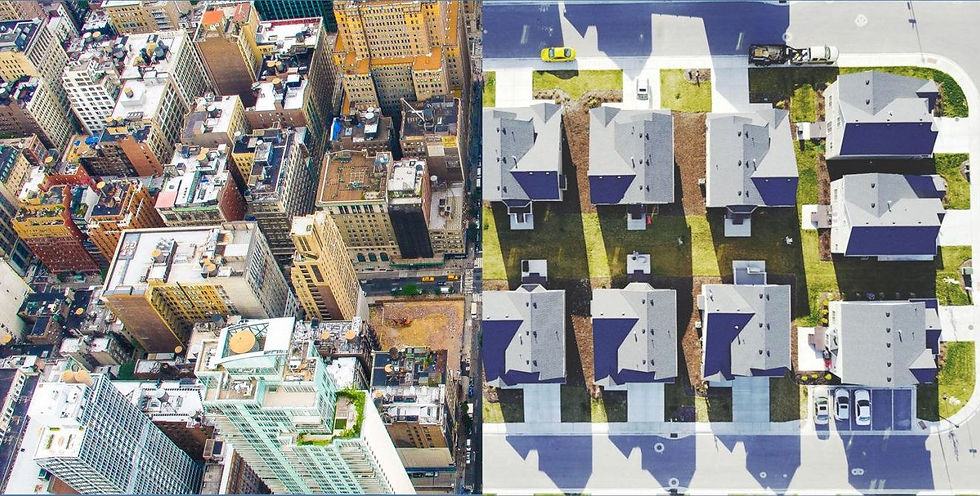
Urban vs. Suburban
The relationship between urban and suburban commercial real estate continues to evolve. Urban areas often benefit from density, walkability, public transportation, restaurants, entertainment, and access to major employers. These factors can support demand for office, retail, multifamily, hospitality, and mixed-use properties.
Suburban markets can also be highly attractive, especially when they offer strong household incomes, access to major highways, good schools, established neighborhoods, and convenient services. Many businesses value suburban locations because they are closer to where employees, customers, and clients live.
The strongest markets are often those that combine convenience, accessibility, and daily-use demand. Suburban office parks, medical office buildings, retail centers, and commercial condominium properties can perform well when they are located near strong residential communities and major employment corridors.
For owners, the key question is not simply whether a property is urban or suburban. The better question is whether the property is located in a market with durable tenant demand, strong access, and a clear reason for businesses to occupy space there.
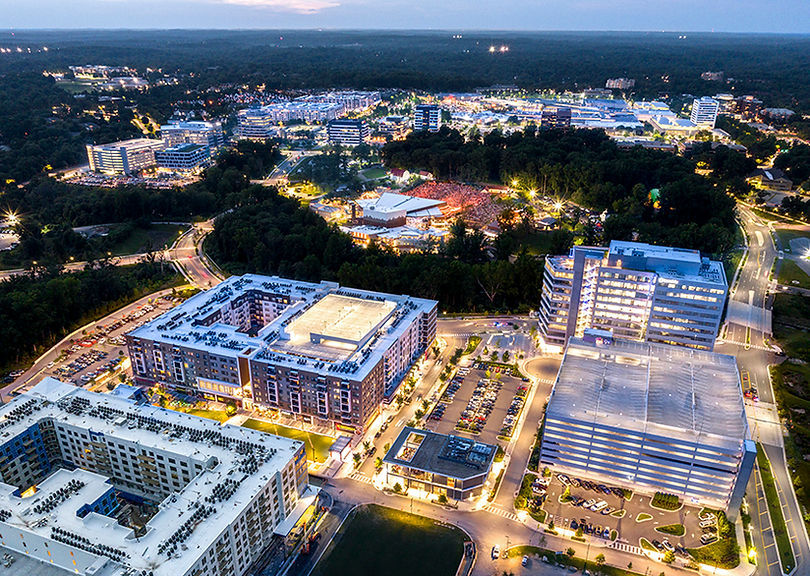
Emerging Markets
Emerging markets can create opportunities for commercial real estate owners and investors, especially when a location benefits from population growth, business expansion, infrastructure investment, or relative affordability compared to more established markets.
In Maryland and the Mid-Atlantic region, markets such as Columbia, Frederick, Towson, Annapolis, and other growing suburban centers can attract attention because they offer access to major employment hubs, transportation corridors, educated workforces, and established residential demand.
Emerging markets are not automatically strong investments, however. Owners and investors should evaluate fundamentals such as:
tenant demand
traffic counts and visibility
household income
employment growth
competing supply
zoning flexibility
local regulations
property condition
financing conditions
A growing market can support commercial real estate property value, but only if the specific property is well-positioned, properly maintained, and aligned with tenant needs.
Infrastructure Developments
Infrastructure can have a significant impact on commercial real estate property value. Transportation projects, road improvements, public transit, airport access, utility upgrades, broadband expansion, streetscape improvements, and public amenities can all make a location more desirable.
Commercial properties near improved infrastructure may benefit from better access, stronger visibility, increased customer traffic, shorter commute times, and greater tenant interest. This is especially important for retail centers, office properties, medical buildings, industrial properties, and mixed-use developments.
In Maryland, infrastructure and accessibility are especially important because many commercial properties serve regional users across the Baltimore, Washington, D.C., and Columbia corridors. Proximity to major highways, transit routes, airports, hospitals, government centers, and employment hubs can directly affect marketability and long-term performance.
Infrastructure improvements should still be evaluated carefully. A new road, transit line, or public project may create opportunity, but it can also bring construction disruption, traffic pattern changes, higher taxes, or new competition. Owners should consider both the short-term disruption and long-term value potential when evaluating infrastructure-related changes.
Why Location Still Drives Long-Term Value
A strong location can support leasing, tenant retention, rental income, financing options, and resale value. A weaker location can make even a well-maintained property harder to lease or sell.
For commercial property owners, location should be evaluated alongside operations. A good location still requires strong management, clean financials, responsive maintenance, tenant communication, and capital planning. The best-performing properties usually combine market strength with disciplined property operations.
Technological Advancements
Technology is changing how commercial properties are managed, operated, leased, and evaluated. For owners and investors, building technology can affect commercial real estate property value by improving operational efficiency, reducing expenses, enhancing tenant experience, and supporting better long-term decision-making.
Technology does not replace strong property management, but it can make management more effective. Smart building systems, property management software, data reporting, online portals, and digital maintenance tools can help owners better understand how their properties are performing.

Smart Buildings
Smart building systems are becoming increasingly important in commercial real estate. These systems can help monitor and control lighting, HVAC, access, security, energy usage, and other building operations.
For property owners, smart building technology can provide several benefits:
lower utility costs
improved tenant comfort
faster identification of maintenance issues
better energy management
improved security
more efficient building operations
For example, smart thermostats, occupancy sensors, energy management systems, and remote monitoring tools can help reduce unnecessary energy use while maintaining a more comfortable environment for tenants and occupants.
These systems can also support preventative maintenance. Instead of waiting for equipment to fail, owners and managers can use data to identify performance issues early and plan repairs before they become major disruptions.
For commercial condominium associations, office buildings, medical buildings, and retail properties, smart building technology can be especially useful when shared systems affect multiple owners or tenants.
Property Technology and Management Software
Property technology, often called PropTech, includes the digital tools used to manage real estate more efficiently. This can include property management software, online portals, maintenance tracking systems, accounting platforms, electronic payment tools, digital document storage, and reporting dashboards.
For commercial property owners and association boards, the right technology can improve:
rent and assessment collection
maintenance request tracking
vendor coordination
financial reporting
document access
owner and tenant communication
budget monitoring
transparency for board members and investors
Property management platforms can also reduce administrative friction. Instead of relying on scattered emails, paper records, and manual tracking, owners and boards can use organized systems to monitor issues, review financials, and communicate with stakeholders.
For commercial condominium associations, this is particularly important. Board members often need access to budgets, meeting materials, invoices, maintenance updates, governing documents, and financial reports. A strong management platform helps centralize that information and creates a better record of association operations.
Data, Reporting, and Decision-Making
Technology also improves the way owners and managers make decisions. Better reporting allows property owners to track income, expenses, maintenance trends, delinquency, vendor costs, capital projects, and budget performance.
This matters because commercial real estate property value is closely tied to net operating income, operational consistency, and the condition of the asset. When owners have better data, they can make better decisions about rent, expenses, capital improvements, reserves, refinancing, and long-term strategy.
For example, a property owner may use financial reports to identify rising utility costs, recurring repairs, or vendor expenses that need to be rebid. An association board may use maintenance history to determine whether a system should be repaired, replaced, or included in a reserve study.
Technology is most valuable when it supports practical management decisions.
Regulatory Environment
The regulatory environment is another major factor that can impact commercial real estate property value. Zoning laws, building codes, environmental requirements, permitting rules, accessibility standards, energy regulations, and local ordinances can all affect how a property can be used, improved, leased, or sold.
For owners, investors, developers, and association boards, regulatory due diligence is essential. A property may appear attractive financially, but zoning limitations, deferred code issues, environmental concerns, or permitting challenges can significantly affect its value and future use.
Zoning Laws
Zoning laws determine how land and buildings may be used. They can regulate whether a property may be used for office, retail, industrial, medical, restaurant, residential, mixed-use, or other purposes.
Zoning can also control:
building height
density
signage
parking requirements
setbacks
permitted uses
conditional uses
redevelopment potential
exterior modifications
For commercial real estate, zoning directly affects value because it determines what an owner can legally do with the property. A well-located property with flexible zoning may appeal to a wider range of tenants and buyers. A property with restrictive zoning may have fewer options, even if the location is strong.
Zoning is especially important when owners are considering a change in use. Converting a property from one use to another may require approvals, permits, variances, public hearings, or site plan review. These processes can take time and may affect project feasibility.
Commercial condominium associations should also pay attention to zoning and use restrictions because a unit owner’s desired business use may be limited by both local zoning and the association’s governing documents.
Environmental Regulations
Environmental regulations can also affect commercial real estate property value. Depending on the property type and location, owners may need to consider stormwater requirements, hazardous materials, underground tanks, asbestos, lead paint, wetlands, energy standards, waste handling, and environmental site conditions.
Environmental issues can create major costs if they are discovered late in the acquisition, financing, or development process. They can also affect insurance, lending, tenant use, and resale value.
For commercial property owners, environmental compliance should be viewed as both a legal issue and an operational issue. Properties with unresolved environmental concerns may be harder to finance, lease, or sell. Properties that are properly maintained and compliant are generally easier to evaluate and manage.
HVAC, Energy, and Sustainability Requirements
Building systems and energy standards are becoming more important in commercial real estate. HVAC equipment, lighting, insulation, ventilation, and energy usage can all affect operating costs and tenant satisfaction.
As energy standards and environmental expectations continue to evolve, older building systems may require upgrades. Owners should pay close attention to HVAC equipment age, refrigerant type, efficiency, maintenance history, and replacement planning.
Energy-efficient improvements can help reduce operating costs and make a property more competitive. These improvements may include LED lighting, high-efficiency HVAC systems, smart thermostats, improved controls, window film, insulation upgrades, or building automation systems.
For commercial condominium associations, energy and HVAC decisions can be more complex because shared systems may affect multiple units or common areas. Boards should plan these improvements carefully, budget appropriately, and communicate clearly with owners.
Why Regulations Matter for Property Value
Regulatory issues can affect commercial real estate property value in several ways. They can influence what the property can be used for, how expensive it is to operate, what improvements are required, whether financing is available, and how attractive the property is to tenants or buyers.
For owners and boards, the best approach is proactive. Review zoning, maintain compliance records, plan for building system upgrades, keep accurate documentation, and work with qualified professionals when legal, environmental, or permitting issues arise.
Market Sentiment and Investor Behavior
Market sentiment and investor behavior play a major role in commercial real estate property value. Even when a property has strong fundamentals, market perception can affect pricing, transaction volume, financing availability, and investor demand.
When investors are confident, they are more likely to pursue acquisitions, renovations, refinancing, and development projects. This can increase competition for quality assets and support stronger property values. When investors become cautious, transaction activity may slow, financing standards may tighten, and buyers may demand higher returns to compensate for perceived risk.
For owners, this means that commercial real estate property value is not only determined by the property itself. It is also influenced by broader market confidence, capital availability, lender appetite, interest rates, tenant demand, and investor expectations.
Investor Confidence
Investor confidence affects how buyers, lenders, and owners evaluate commercial real estate. When confidence is strong, investors may be more willing to accept lower cap rates, move quickly on acquisitions, and invest in capital improvements. When confidence weakens, buyers may become more selective, request deeper due diligence, or discount properties with operational issues.
Different property types can also experience different levels of investor confidence. Properties with stable income, strong tenants, good locations, and predictable expenses may remain attractive even during uncertain markets. Properties with vacancy, deferred maintenance, short lease terms, or unclear financials may face more scrutiny.
This is why strong property operations matter. Clean financial reporting, organized maintenance records, clear leases, responsive management, and thoughtful capital planning can help improve buyer and lender confidence. A well-managed property is generally easier to evaluate, finance, lease, and sell.
Risk Management
Risk management is a key part of commercial real estate ownership and investment. Owners and investors must consider financial risk, operational risk, tenant risk, regulatory risk, maintenance risk, and market risk.
Common risk management strategies include:
maintaining accurate financial records
monitoring operating expenses
budgeting for capital improvements
reviewing lease terms and tenant credit
avoiding excessive deferred maintenance
maintaining adequate insurance
planning for interest rate changes
diversifying tenant mix when possible
understanding zoning and regulatory requirements
using reserve studies or capital plans for major building systems
For commercial condominium associations, risk management also includes assessment collection, reserve planning, vendor oversight, insurance coordination, owner communication, and compliance with governing documents.
Strong risk management can support commercial real estate property value by reducing uncertainty. Buyers, lenders, tenants, and owners generally prefer properties with clear records, stable operations, and fewer unresolved issues.
Final Thoughts
Commercial real estate property value is shaped by a combination of economic conditions, location, income, expenses, tenant demand, property condition, technology, regulations, investor confidence, and risk management. No single factor determines value on its own. The strongest properties are usually those with solid fundamentals, disciplined operations, clear financial reporting, and a plan for long-term maintenance and capital needs.
Owners, investors, developers, and association boards should evaluate commercial properties from both a market perspective and an operational perspective. A good location matters, but so do maintenance, budgeting, tenant communication, vendor coordination, lease administration, compliance, and long-term planning.
JFI Real Estate Management helps commercial property owners and association boards improve operations, budgeting, vendor coordination, financial reporting, maintenance oversight, and long-term capital planning. If you are evaluating the performance of a commercial property or commercial condominium association, contact JFI Real Estate Management to discuss how professional management can support your goals.
Email: info@jfirealestate.com
Phone: 443-800-6050
Website: www.jfirealestate.com


