How Economic Cycles Affect Commercial Real Estate Value, Risk, and Investment Strategy

Commercial real estate is deeply connected to the broader economy. Property values, rental income, vacancy, financing terms, tenant demand, and investor appetite are all influenced by economic cycles. When the economy expands, commercial properties may benefit from stronger leasing activity, rising rents, lower vacancy, and improved investor confidence. When the economy contracts, owners may face weaker tenant demand, tighter credit markets, declining cash flow, and pressure on valuations.
Understanding economic cycles is essential for commercial property owners, investors, lenders, developers, association boards, and property managers. Commercial real estate is not valued in isolation. It is valued through the interaction of income, expenses, risk, capital markets, tenant credit, location, building condition, and long-term demand. Economic cycles influence each of these variables.
This article examines how expansion, peak, contraction, and recovery phases affect commercial real estate performance. It also explains the indicators owners should monitor, the risks that emerge during each phase, and the management strategies that can help preserve cash flow, maintain operations, and position assets for long-term performance.
Economic Cycles Commercial Real Estate Owners Should Understand
Economic cycles are one of the most important forces shaping commercial real estate performance. They influence tenant demand, rental income, vacancy, financing conditions, investor confidence, cap rates, and property values. For commercial property owners and investors, understanding these cycles is not theoretical. It directly affects acquisition strategy, leasing decisions, refinancing risk, capital planning, and long-term asset performance.
Commercial real estate does not move independently from the broader economy. When businesses are growing, hiring, and investing, demand for commercial space often increases. When the economy slows, tenants may delay expansion, reduce space, renegotiate leases, or close locations. These shifts can materially affect cash flow and property value.
Economic cycles are generally divided into four phases: expansion, peak, contraction, and trough. Each phase creates different risks and opportunities for commercial property owners.

Definition and Phases
Economic cycles refer to recurring periods of growth and slowdown in overall economic activity. These cycles are influenced by consumer spending, business investment, employment trends, interest rates, inflation, credit availability, government policy, and global market conditions.
For commercial real estate, each phase of the cycle affects how properties are leased, financed, managed, valued, and sold.
Expansion
The expansion phase occurs when economic activity is increasing. During this period, businesses often grow, employment improves, consumer confidence rises, and companies may invest in new locations, equipment, and hiring.
For commercial real estate, expansion usually supports stronger tenant demand. Office users may add employees, retailers may pursue new locations, industrial users may need more warehouse or distribution space, and service businesses may expand into stronger markets.
During expansion, owners may see:
stronger leasing activity
lower vacancy
higher rental rates
improved tenant confidence
increased investor demand
stronger property values
However, expansion also requires discipline. Owners should avoid assuming that favorable conditions will continue indefinitely. This is often the right time to strengthen leases, address deferred maintenance, improve reporting, build reserves, and evaluate long-term capital needs.
Peak
The peak phase occurs when economic growth begins to slow after a period of expansion. The economy may still appear strong, but signs of pressure often begin to emerge. Inflation may increase, labor costs may rise, interest rates may move higher, and asset pricing may become more aggressive.
In commercial real estate, the peak phase can create valuation risk. Properties may trade at prices that assume continued rent growth, low vacancy, easy financing, and stable operating conditions. If those assumptions weaken, buyers and lenders may become more cautious.
During the peak phase, owners and investors should watch for:
compressed cap rates
aggressive pricing
rising debt costs
elevated construction costs
weaker investment yields
overbuilding in certain sectors
tenants becoming more cost-sensitive
This is a phase where discipline matters. Owners should be careful with leverage, avoid overpaying for assets, maintain liquidity, and make sure budgets reflect realistic operating expenses and capital needs.
Contraction
The contraction phase occurs when economic activity slows. In a recession or downturn, businesses may reduce spending, delay expansion, close locations, or downsize operations. Consumer confidence may decline, unemployment may rise, and lenders may tighten credit standards.
For commercial real estate, contraction can affect both income and value. Vacancy may increase, rent growth may slow or reverse, tenant defaults may become more common, and refinancing may become more difficult.
During contraction, owners may face:
higher vacancy
lower rental income
more rent concessions
slower leasing activity
tighter financing conditions
declining property values
increased pressure on cash flow
This is where strong property management becomes especially important. Owners need accurate financial reporting, active tenant communication, expense control, preventative maintenance, collections oversight, and disciplined budgeting. Properties with clean records, stable tenants, reasonable debt, and well-maintained building systems are usually better positioned to withstand downturns.
Trough and Recovery
The trough is the lowest point of the economic cycle. Market conditions may still be difficult, but the rate of decline begins to stabilize. Over time, tenant demand starts to return, financing conditions may improve, and investor confidence slowly rebuilds.
For commercial real estate investors, this phase can create opportunity. Distressed or undervalued properties may become available, competition may be lower, and long-term buyers may be able to acquire assets at more favorable pricing.
During the trough and early recovery phase, owners and investors should focus on:
identifying properties with strong underlying fundamentals
preserving cash flow
maintaining tenant relationships
planning capital improvements carefully
evaluating acquisition opportunities
preparing for the next expansion cycle
The recovery phase rewards owners who remained disciplined during the downturn. Properties with strong locations, functional building systems, stable tenants, and organized financials are usually better positioned to benefit as market conditions improve.
Historical Context: What Economic Cycles Teach Commercial Real Estate Owners
Economic cycles have repeatedly shaped commercial real estate markets. While every cycle is different, the underlying pattern is often similar: credit expands, asset values rise, investor confidence builds, leverage increases, market conditions shift, and weaker assets or overextended owners become exposed.

For commercial real estate owners and investors, history is useful because it shows how sensitive property performance can be to capital markets, employment, inflation, tenant demand, lending standards, and investor psychology. It also reinforces an important point: commercial real estate risk is not only about the physical property. It is also about timing, financing, tenant quality, lease structure, management discipline, and the broader economy.
A well-located property can still struggle if it is overleveraged, poorly maintained, mismanaged, or dependent on weak tenants. Likewise, a property with strong operations, conservative debt, durable tenant demand, and disciplined financial reporting may be better positioned to withstand market disruption.
Early Financial Panics and Real Estate Volatility
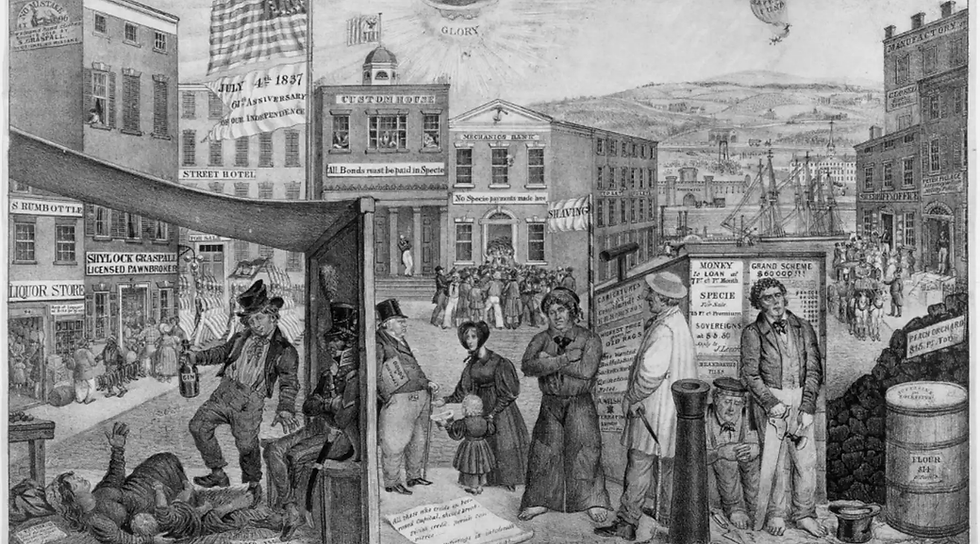
Financial crises in the 1800s, including the Panic of 1837, the Panic of 1857, and the Panic of 1873, were driven by issues such as speculative lending, commodity shocks, bank failures, and overexpansion. These downturns created broad economic distress and reduced investment activity, including real estate investment.
For modern commercial real estate owners, the lesson is that excessive credit expansion can distort asset values. When financing is readily available, buyers may pay prices that assume continued growth, stable income, and easy refinancing. If credit conditions tighten, those assumptions can break down quickly.
Commercial real estate values are closely connected to capital availability. When lenders become more cautious, transaction volume can slow, refinancing can become more difficult, and properties with weaker income or higher leverage may face pressure.
The Great Depression and the Risk of Overextension
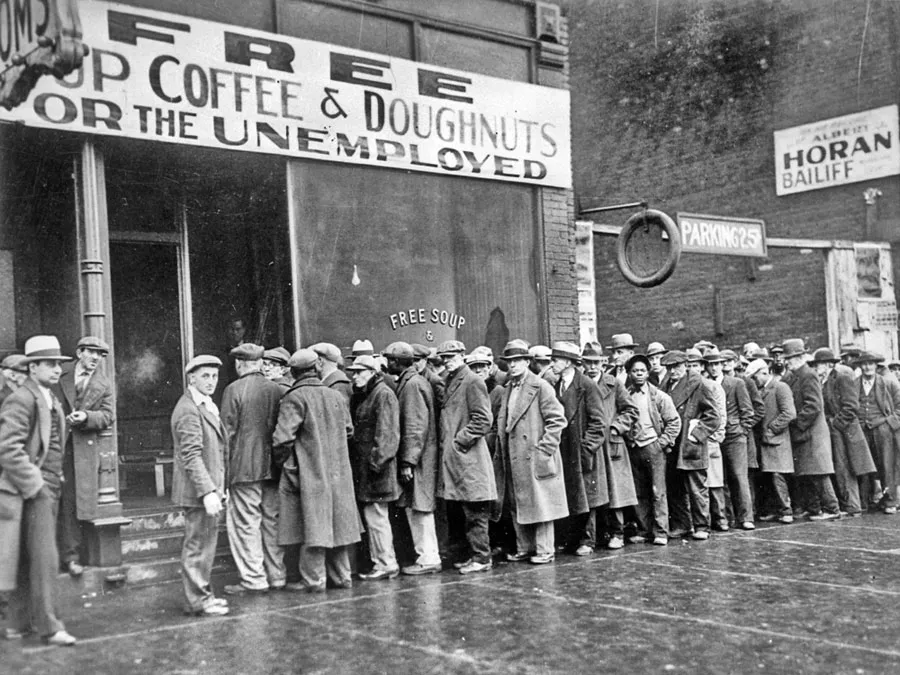
The economic expansion of the 1920s was followed by the stock market crash of 1929 and the Great Depression. The collapse in business activity, employment, consumer spending, and credit availability placed severe stress on real estate markets.
For commercial real estate, the Great Depression illustrates how quickly property performance can weaken when tenants, lenders, consumers, and investors are all under pressure at the same time. Rental income, occupancy, financing availability, and buyer demand can all decline together.
The lesson for today’s owners is clear: strong market momentum should not replace disciplined underwriting. Conservative debt, adequate reserves, durable tenant demand, and proactive management matter most when the broader economy weakens.
Post-World War II Expansion and Suburban Growth

After World War II, the United States experienced a long period of economic growth, population expansion, infrastructure investment, suburban development, and rising household income. This period helped drive demand for retail centers, office buildings, industrial facilities, medical offices, and suburban commercial corridors.
This cycle demonstrates how demographic growth, infrastructure, transportation patterns, government policy, and consumer behavior can reshape commercial real estate demand. Many suburban office parks, shopping centers, and commercial corridors were built around these long-term economic and demographic shifts.
For owners and investors, the lesson is that long-term value is often tied to structural demand drivers. Population growth, access, employment centers, household income, transportation routes, and local business activity can be just as important as short-term market pricing.
1970s Stagflation and Inflation Risk

The 1970s created a different type of challenge: high inflation combined with slower economic growth. Rising energy costs, higher interest rates, and economic uncertainty created pressure on both operating expenses and financing.
For commercial real estate, inflation can be both a risk and an opportunity. Properties with strong leases, rent escalations, expense pass-throughs, and pricing power may be better positioned. Properties with weak lease language, rising costs, or limited ability to recover expenses may see net operating income compressed.
This period reinforces the importance of lease structure and expense management. Owners must understand how inflation affects utilities, insurance, maintenance, labor, taxes, CAM charges, capital projects, and reserve funding. In commercial condominium associations, inflation can also place pressure on annual assessments, reserve contributions, vendor contracts, and long-term capital planning.
The Savings and Loan Crisis and Commercial Real Estate Lending Risk

The Savings and Loan Crisis of the late 1980s and early 1990s had a major impact on commercial real estate. Risky lending practices, overbuilding, and weak underwriting contributed to market distress. When conditions changed, lenders failed, credit tightened, property values declined, and vacancy increased in many markets.
This period is especially relevant to commercial real estate because it shows the danger of overbuilding and excessive leverage. A property may appear strong during an expansion, but if it is financed aggressively or located in an oversupplied market, it can become vulnerable when demand slows.
The lesson for owners, investors, and lenders is to evaluate real estate based on durable income, replacement cost, supply conditions, tenant quality, market depth, and realistic exit assumptions. Growth alone is not enough. The fundamentals must support the valuation.
The Dot-Com Boom and Sector-Specific Risk

The late 1990s and early 2000s showed how sector-specific growth can influence commercial real estate. Technology companies expanded rapidly, increasing demand for office space in certain markets. When the dot-com bubble burst, some of that demand disappeared, creating stress in tech-heavy office markets.
This cycle illustrates that commercial real estate risk is not always broad-based. Sometimes risk is concentrated in a specific industry, tenant type, geography, or property sector.
For owners, the lesson is to understand tenant concentration and industry exposure. A building heavily dependent on one industry may perform well during that sector’s expansion phase but face greater risk if that industry contracts. Tenant diversity, lease maturity schedules, and credit quality should be evaluated as part of any ownership or acquisition strategy.
The Great Recession and the Capital Markets Shock
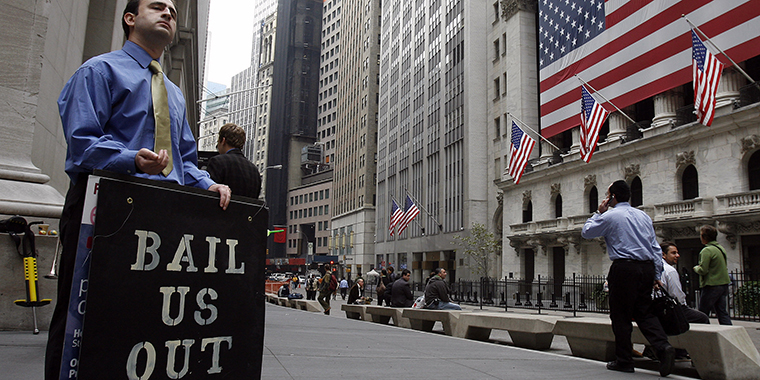
The Great Recession was one of the most important modern examples of how financial markets can affect commercial real estate. The downturn reduced liquidity, tightened lending standards, weakened tenant demand, increased vacancies, and placed pressure on property values.
For commercial real estate owners, the Great Recession reinforced the importance of debt structure and cash flow resilience. Owners with excessive leverage, short-term debt maturities, weak tenants, or limited reserves were more exposed. Owners with stronger balance sheets, stable income, and disciplined operations were better positioned to hold assets through the downturn.
The lesson is that financing strategy is part of property strategy. Interest rates, loan maturity, debt service coverage, tenant credit, cash reserves, and capital planning can determine whether an owner can withstand a downturn or is forced to sell under pressure.
COVID-19 and the Uneven Impact Across Property Types

The COVID-19 pandemic created a sudden economic shock and affected property types very differently. Retail, hospitality, and office properties faced major disruption, while industrial and logistics assets often benefited from accelerated e-commerce demand and supply chain changes.
This period highlighted the importance of sector-level analysis. A downturn does not affect every property equally. Tenant use, lease structure, location, building functionality, business model, and consumer behavior all matter.
For commercial property owners and association boards, COVID-19 also demonstrated the importance of communication, operational flexibility, vendor coordination, access policies, financial planning, and responsive management during periods of uncertainty.
Post-Pandemic Adjustment and Long-Term Demand Shifts

The post-pandemic period has been defined by uneven recovery and structural adjustment. Hybrid work, e-commerce, inflation, higher interest rates, supply chain changes, tenant expectations, and operating cost pressure have all affected commercial real estate markets.
Office owners have had to reconsider space utilization, building quality, tenant experience, and leasing strategy. Retail owners have focused on service-based tenants, medical uses, restaurants, grocery-anchored demand, and necessity-based retail. Industrial owners have benefited from logistics and distribution demand, although pricing, supply, and financing conditions vary by market.
The broader lesson is that commercial real estate cycles are not only about recession and recovery. They are also about adaptation. Properties that align with long-term tenant needs, operate efficiently, maintain strong financial records, and plan for capital requirements are generally better positioned than properties relying on outdated assumptions.
Key Economic Indicators That Affect Commercial Real Estate
Commercial real estate owners should monitor economic indicators because they provide context for leasing demand, financing conditions, operating costs, and investor appetite. No single indicator tells the full story, but together they help identify where the market may be within the broader economic cycle.
GDP Growth

Gross Domestic Product measures overall economic output. When GDP is growing, businesses are generally producing, hiring, expanding, and investing. This can support demand for office, retail, industrial, medical, and service-based commercial space.
When GDP slows or contracts, businesses may delay expansion, reduce space needs, or become more cautious with leasing decisions. For commercial property owners, slower growth can translate into longer vacancy periods, weaker rent growth, and more conservative tenant behavior.
Employment and Business Formation
Employment trends are closely tied to commercial real estate demand. A strong labor market can support office occupancy, retail spending, medical demand, logistics activity, and general business expansion.
Business formation is also important. New businesses create demand for small offices, flex space, retail storefronts, medical suites, coworking space, and service-based commercial locations. When hiring and business formation slow, leasing activity often becomes more cautious.
Inflation and Operating Expenses
For owners, the key question is whether rising costs can be recovered through rent increases, CAM reimbursements, triple-net lease structures, annual escalations, or association assessments. If expenses rise faster than income, net operating income can be compressed.
For commercial condominium associations, inflation can affect annual budgets, reserve contributions, owner assessments, vendor contracts, and the timing of capital projects.
Interest Rates and Capital Markets

Interest rates affect borrowing costs, refinancing risk, acquisition pricing, and investor demand. Higher interest rates generally increase debt service and can reduce the amount buyers are willing or able to pay for a property.
When financing becomes more expensive or harder to obtain, transaction volume may slow and cap rates may adjust. Properties with strong income, stable tenants, and clean financial records are usually better positioned with lenders than properties with weak reporting, vacancy, deferred maintenance, or unclear operating history.
Consumer Confidence and Business Investment
Consumer confidence affects retail, restaurant, hospitality, and service-based commercial properties. When consumers feel financially secure, they are more likely to spend, which can support tenant sales and leasing demand.
Business investment is another important signal. When companies are investing in equipment, hiring, locations, and expansion, commercial real estate demand often improves. When companies reduce investment, demand for space may weaken.
How Economic Cycles Affect Commercial Property Performance
Economic cycles affect commercial real estate at both the market level and the property level. Market conditions influence demand, pricing, and financing. Property-level execution determines how well an asset performs within those conditions.
Expansion: Growth and Discipline
During an expansion, leasing activity often improves, vacancy declines, rents may rise, and investor demand increases. Owners may have opportunities to improve occupancy, renew tenants, refinance, complete capital projects, or reposition a property.
However, expansion is also when owners must remain disciplined. Strong markets can hide weak operations. A property may appear healthy because demand is strong, even if the budget is thin, reserves are inadequate, maintenance is deferred, or lease terms are poorly structured.
During expansion, owners should focus on:
strengthening tenant relationships
improving lease terms
reviewing rent escalations and expense recovery
addressing deferred maintenance
building reserves
improving financial reporting
planning capital projects before market conditions tighten
Peak: Pricing Risk and Liquidity Management
At the peak of a cycle, property values may be high, competition may be aggressive, and investors may accept lower yields. This is when the risk of overpaying increases.
Peak markets often reward caution. Owners and investors should test assumptions carefully. Rent growth, low vacancy, cheap capital, and strong exit pricing should not be assumed indefinitely.
During a peak, owners should pay close attention to:
leverage levels
loan maturity dates
tenant rollover
cap rate assumptions
construction costs
liquidity
major upcoming repairs
exposure to short-term leases or weak tenants
The goal is not to predict the exact top of the market. The goal is to avoid being overextended when conditions change.
Contraction: Cash Flow, Vacancy, and Risk Control
During a contraction, tenant demand may weaken, vacancies may rise, rent growth may slow, financing may tighten, and property values may come under pressure. This phase tests the quality of both the asset and the management.
Properties with strong tenants, durable locations, conservative debt, accurate financials, and proactive maintenance are generally better positioned. Properties with high vacancy, deferred maintenance, weak records, or aggressive debt may face greater stress.
During contraction, owners should focus on:
preserving occupancy
controlling operating expenses
communicating with tenants
managing collections
reviewing vendor contracts
prioritizing essential repairs
maintaining accurate financial reporting
planning carefully before taking on major capital projects
For commercial condominium associations, contractions can also affect owner participation, assessment collection, special assessment tolerance, and reserve planning.
Trough and Recovery: Opportunity with Caution
The trough represents the low point of the cycle. Conditions may still be difficult, but pricing may become more attractive and competition may be lower. This can create opportunities for well-capitalized buyers and disciplined owners.
However, not every discounted property is a good investment. Distress often reveals real problems: poor location, weak tenants, obsolete building systems, overbuilding, bad debt structure, or deferred maintenance.
During the trough and early recovery period, investors should focus on fundamentals:
location quality
tenant demand
replacement cost
building condition
lease structure
realistic rent assumptions
capital improvement needs
financing terms
long-term market demand
Recovery rewards owners who can separate temporary market distress from permanent asset weakness.
Lessons from Recent Economic Disruptions
Two modern examples, the Great Recession and the COVID-19 pandemic, show why commercial real estate owners must evaluate both capital markets and property operations.
The Great Recession
The Great Recession demonstrated how quickly commercial real estate can be affected when credit markets tighten. Property values declined, financing became harder to obtain, vacancies increased, development slowed, and distressed assets came to market.
The central lesson was that debt structure matters. Owners with excessive leverage, weak tenant income, short loan maturities, or limited reserves were more vulnerable. Owners with stronger cash flow, more conservative financing, and better operational discipline were generally better positioned to hold through the downturn.
For commercial property owners, the Great Recession reinforced the importance of:
conservative underwriting
realistic exit assumptions
strong debt service coverage
adequate reserves
clean financial reporting
tenant credit review
proactive asset management
The COVID-19 Pandemic
The COVID-19 pandemic showed that economic disruption does not affect all property types equally. Office, retail, and hospitality properties faced major pressure, while industrial, logistics, and certain essential-service properties performed more strongly.
The pandemic also accelerated existing trends, including e-commerce growth, hybrid work, tenant demand for flexibility, and increased focus on building operations.
For owners and boards, the pandemic reinforced the importance of:
tenant communication
emergency planning
flexible operations
digital management systems
cash flow monitoring
vendor coordination
understanding sector-specific risk
maintaining clear policies and documentation
The broader lesson is that commercial real estate risk is not only about the economy. It is also about the property’s use, tenant base, lease structure, management systems, and ability to adapt.
Investment Strategy Through the Cycle
Commercial real estate investing requires more than buying during downturns and selling during expansions. Successful owners focus on fundamentals through every phase of the cycle.
Diversification
Diversification can reduce exposure to a single tenant type, property sector, or geographic market. Office, retail, industrial, medical, flex, and mixed-use properties may respond differently to the same economic conditions.
Geographic diversification can also reduce risk, since local economies do not always move in the same direction at the same time. A market dependent on one employer or industry may face different risks than a market supported by healthcare, government, education, logistics, and professional services.
For smaller owners, diversification may not mean owning assets across the country. It may mean avoiding overdependence on one tenant, one industry, one lease expiration date, or one capital source.
Market Timing
Perfectly timing the market is extremely difficult. Many investors try to buy at the bottom and sell at the top, but cycles are only obvious in hindsight.
A more disciplined approach is to understand where risk is increasing or decreasing. During strong markets, owners should avoid overleveraging and overpaying. During weak markets, owners should avoid assuming every discounted asset is a good opportunity.
Good timing is not just about price. It is also about financing, tenant demand, capital needs, and the owner’s ability to execute the business plan.
Focus on Fundamentals
The most durable commercial real estate strategies are built around fundamentals:
strong location
durable tenant demand
functional building systems
realistic rents
manageable debt
clear financial records
strong lease structure
disciplined expense control
adequate reserves
professional management
Market cycles matter, but fundamentals determine whether a property can withstand stress and participate in recovery.
Why Professional Management Matters During Economic Cycles
Economic cycles do not affect all properties equally. Two properties in the same market can perform very differently depending on management execution.
Professional management helps owners and boards make better decisions through changing conditions. During strong markets, management can help capture opportunity by improving operations, budgeting accurately, addressing deferred maintenance, and strengthening tenant or owner communication. During slower markets, management becomes even more important because cash flow, expenses, collections, and maintenance decisions require closer attention.
For commercial condominium associations, professional management can support:
budgeting
assessment collection
owner communication
reserve planning
vendor coordination
meeting preparation
insurance coordination
capital project planning
financial reporting
maintenance oversight
In every phase of the cycle, disciplined management supports better decision-making.
Conclusion
Economic cycles have a direct impact on commercial real estate values, rental income, vacancy, financing, investor demand, and long-term asset performance. Expansion, peak, contraction, and recovery phases each create different risks and opportunities.
The strongest commercial real estate owners do not rely only on market momentum. They focus on fundamentals, maintain financial discipline, understand tenant demand, manage expenses, plan capital projects, and keep accurate records.
JFI Real Estate Management provides commercial property management and commercial condominium association management throughout Maryland. We help owners and boards manage the operational, financial, and capital planning decisions that affect long-term property performance.
Our work includes budgeting, financial reporting, assessment and rent collection support, vendor coordination, maintenance oversight, owner and tenant communication, reserve planning support, and board guidance for commercial properties and associations.
If you are evaluating a commercial property, reviewing your association’s management, or planning for changing market conditions, contact JFI Real Estate Management to discuss how professional management can support your goals.
Email: info@jfirealestate.com
Phone: 443-800-6050
Website: www.jfirealestate.com